
What is dropshipping and how does it work?
Discover what dropshipping is and how to start it the smart way. With Afosto you easily manage your stock and suppliers. Start dropshipping today.
Dropshipping has become hugely popular among starting e-commerce entrepreneurs in recent years. It offers a low-threshold way to launch a webshop without having to manage a warehouse or stock yourself. But how exactly does dropshipping work? And how can you run this model efficiently with a platform like Afosto?
In this article we explain what dropshipping is, what its advantages and disadvantages are, which systems you need and why Afosto is a great fit for dropshipping.
The meaning of dropshipping
The meaning of dropshipping is fairly simple: you sell products through your own webshop, but the products are shipped directly by an external party, the dropshipping supplier. You are responsible for the marketing, the customer service and running the webshop. The supplier handles storage, order picking and shipping.
So you never have to buy stock or send parcels yourself. That is what makes dropshipping attractive for entrepreneurs who want to start a webshop with low costs. Read more about the order management systems that support this.
How does dropshipping work?
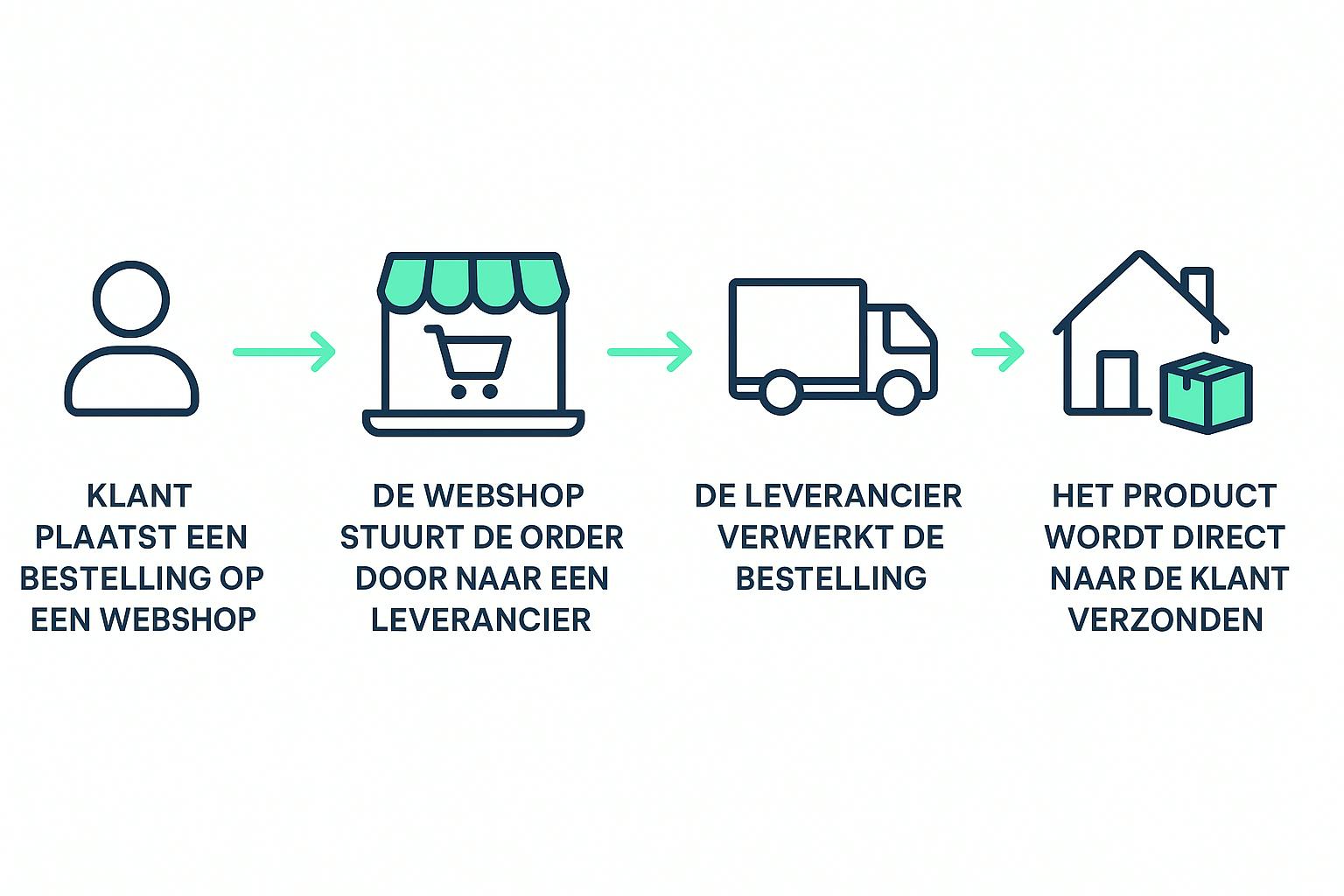
The process roughly looks like this:
-
A customer places an order in your webshop.
-
You forward this order to your dropshipping supplier, either manually or automatically with Afosto.
-
The supplier processes the order and ships the product straight to the customer.
-
You keep the margin between your selling price and your purchase price.
Ready to start dropshipping? Here is how you do it with Afosto
Want to start dropshipping? Afosto gives you the perfect technical foundation. In our platform you can easily create a location that is linked to an external stock source, for example through an external supplier or wholesaler. Where many systems fall short on flexibility or automation, Afosto gives you a firm grip on your operational processes.
Read our article on multichannel order management too.
How does dropshipping work in Afosto?
-
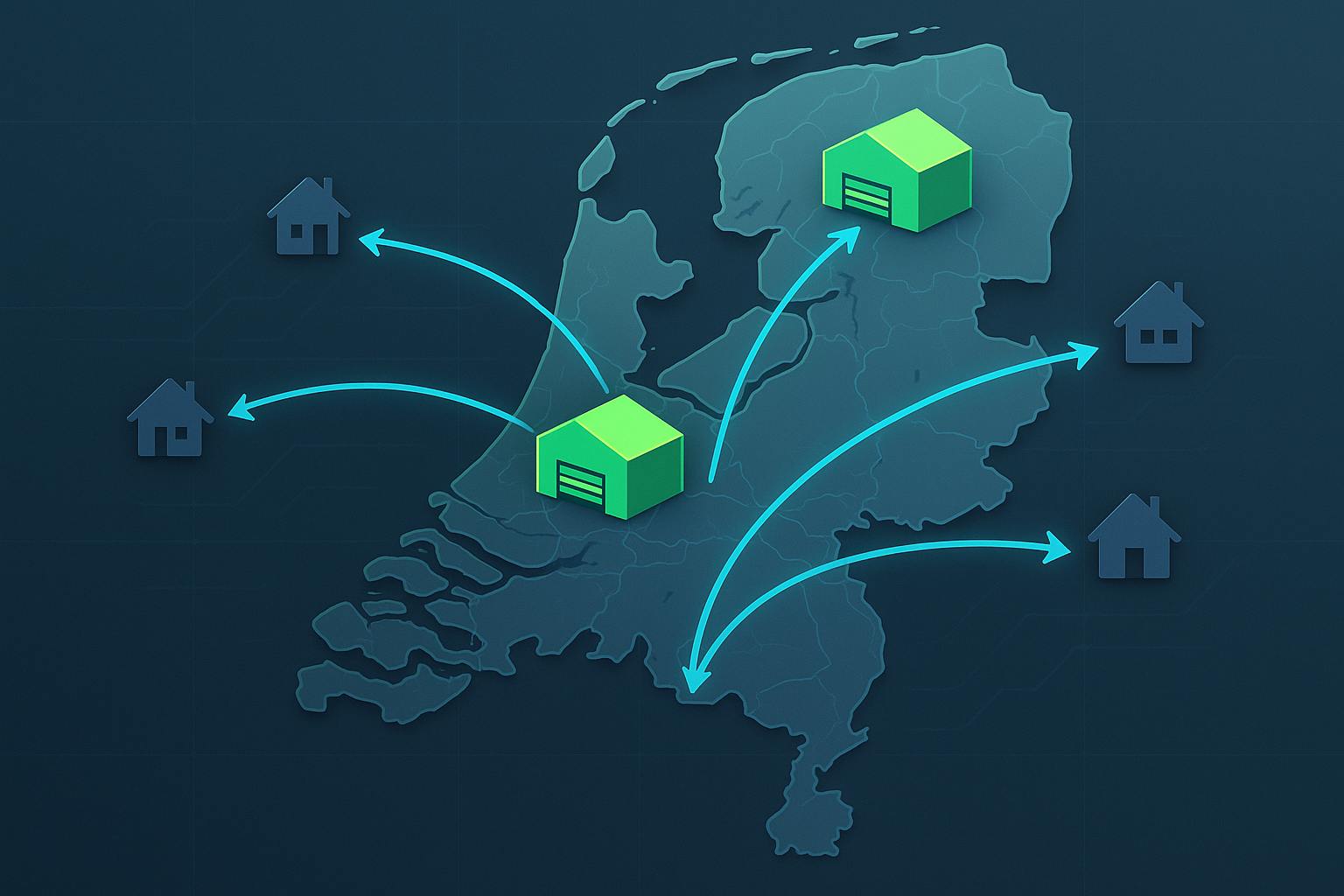
Link an external stock location: Create a separate location in Afosto for your dropship supplier.
-
Synchronise stock: Load this supplier's stock automatically through the WMS system.
-
Automatic allocation: As soon as an order comes in with a product from this stock, the order is automatically assigned to the right location.
-
Efficient order handling: The supplier receives the order information directly and ships the product to the customer.
Thanks to this way of working, Afosto is a great fit for dropshipping, with support for multiple locations, real-time stock updates and automatic order allocation.
Advantages and disadvantages of dropshipping
Advantages:
-
Low start-up costs – no investment in stock or a warehouse
-
Scalability – easily add more products without logistical pressure
-
Flexibility – work wherever you want, without a physical warehouse
-
Fast launch – get your webshop up and running in no time
Disadvantages:
-
Low margins – you make less profit per product than with your own stock
-
Dependent on suppliers – if they make mistakes, your customer notices
-
Limited control – you have no influence over delivery times or packaging
-
Competition – many dropshippers sell the same products
Even so, for many starters and smaller webshops the advantages outweigh the drawbacks, especially with a system like Afosto that takes some of the complexity off your hands.
Dropshipping vs traditional e-commerce
With traditional e-commerce you buy stock, store it and ship it yourself, which means higher start-up costs but more control over quality, delivery times and packaging. With dropshipping you carry no stock and your supplier ships directly, which keeps your costs and risk low but hands part of the control to the supplier.
The best dropshipping sites & suppliers
The success of dropshipping stands or falls with choosing good dropshipping suppliers. Think of parties such as:
-
local wholesalers
-
European dropshipping platforms
-
international sites such as AliExpress
With Afosto you are free to choose. Any supplier that can provide a stock file can be integrated. You can easily link multiple dropshipping sites or suppliers, each with their own products, shipping rules and margins. Take a look at our developer integrations or developer documentation.
Why Afosto for dropshipping?
E-commerce is growing fast and the competition is fierce. Anyone who wants to start dropshipping seriously needs scalable technology, flexibility and automation. Afosto is built with exactly those principles in mind:
-
Multiple stock locations possible
-
Automatic synchronisation of external stock
-
Order allocation based on location and availability
-
Full control over order flows and notifications
Whether you are just getting started or want to extend your existing webshop with dropshipping: with Afosto you build a future-proof system.
Frequently asked questions about dropshipping
What is dropshipping
Dropshipping is a business model in which you sell products through your webshop without holding physical stock. When an order comes in, you order from a supplier who ships the product straight to the customer.
Is dropshipping legal?
Yes, dropshipping is allowed. You need to register your business, handle VAT correctly and comply with consumer legislation, such as the right of return and clear product information.
What are the advantages of dropshipping
-
No stock costs or logistics.
-
Low start-up costs and flexible product testing.
-
No staff needed for shipping.
What are the disadvantages of dropshipping
-
Limited control over product quality and delivery.
-
Lower margins due to competition and supplier costs.
-
You are liable in case of defects or delays.
How do I find reliable suppliers?
Search through supplier platforms, use your network, read reviews, place test orders and check the consistency of delivery times and quality.
How do I carry out product research?
Analyse demand through tools, review platforms and trend sites; focus on niches where margins are better and competition is lower.