
What is cross-docking
Discover what cross-docking is and how retailers use it to speed up their logistics and cut costs. Includes examples.

The term cross-docking comes from logistics and literally means the "crosswise" loading and unloading of goods. Instead of storing products in a warehouse, they are transferred directly from the incoming transport to the outgoing transport at a cross-dock location.
In this case the warehouse acts purely as a transshipment point, with no (or minimal) storage. Goods usually stay on site for less than 24 hours.
Cross-docking in short:
Goods come in, get sorted and go straight back out again, without first being placed into stock.
When is cross-docking a good fit?
Not every organization or product group lends itself to cross-docking. The method works best when:
-
Your products are turned over quickly (high turnover rate)
-
You work with reliable suppliers and carriers
-
Your processes are well set up digitally with a warehouse management system (WMS)
-
The time between order and delivery needs to be as short as possible
Typical situations where cross-docking works well:
-
Webshops with fast delivery promises
-
Retailers with multiple locations
-
Just-in-time deliveries to wholesalers or shops
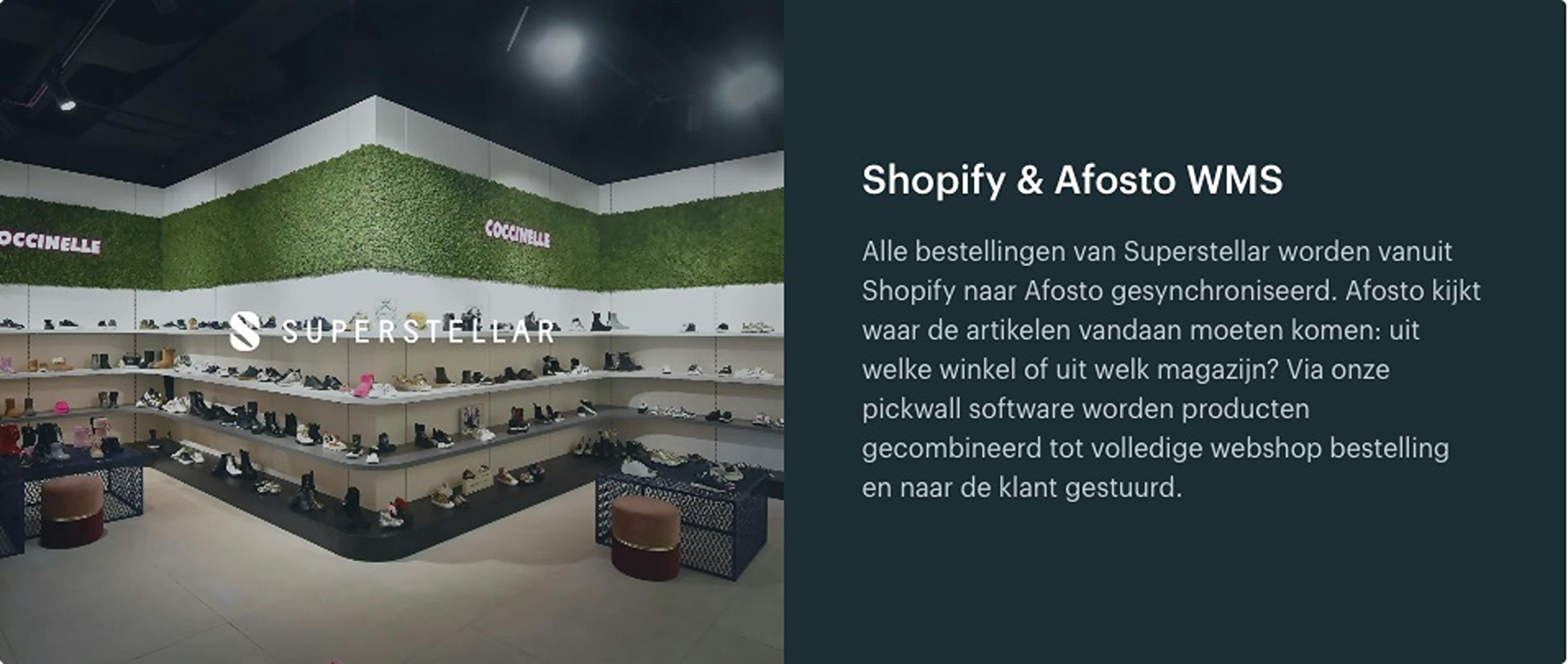
How Superstellar (an Afosto customer) uses this
At Superstellar the warehouse and the shops are physically close to each other. That allows for a lot of flexibility in the way goods are delivered and processed. With Afosto this process is largely automated.
"In the morning our colleagues in the shop review the delivery requests that are created automatically in Afosto. We use the scanner with the ScanApp for that. As soon as we come by from the warehouse, we pick up those delivery requests, close them off and physically take the products back with us to the warehouse."
Once there, the items are processed through goods receipt. It is important to check carefully that the delivery list has been fully processed and is back to zero.
We also use a pick wall system to sort and process the incoming products efficiently. Through Afosto's pick wall software, products are combined into complete webshop orders and sent to the customer.
What exactly do delivery requests do in Afosto?
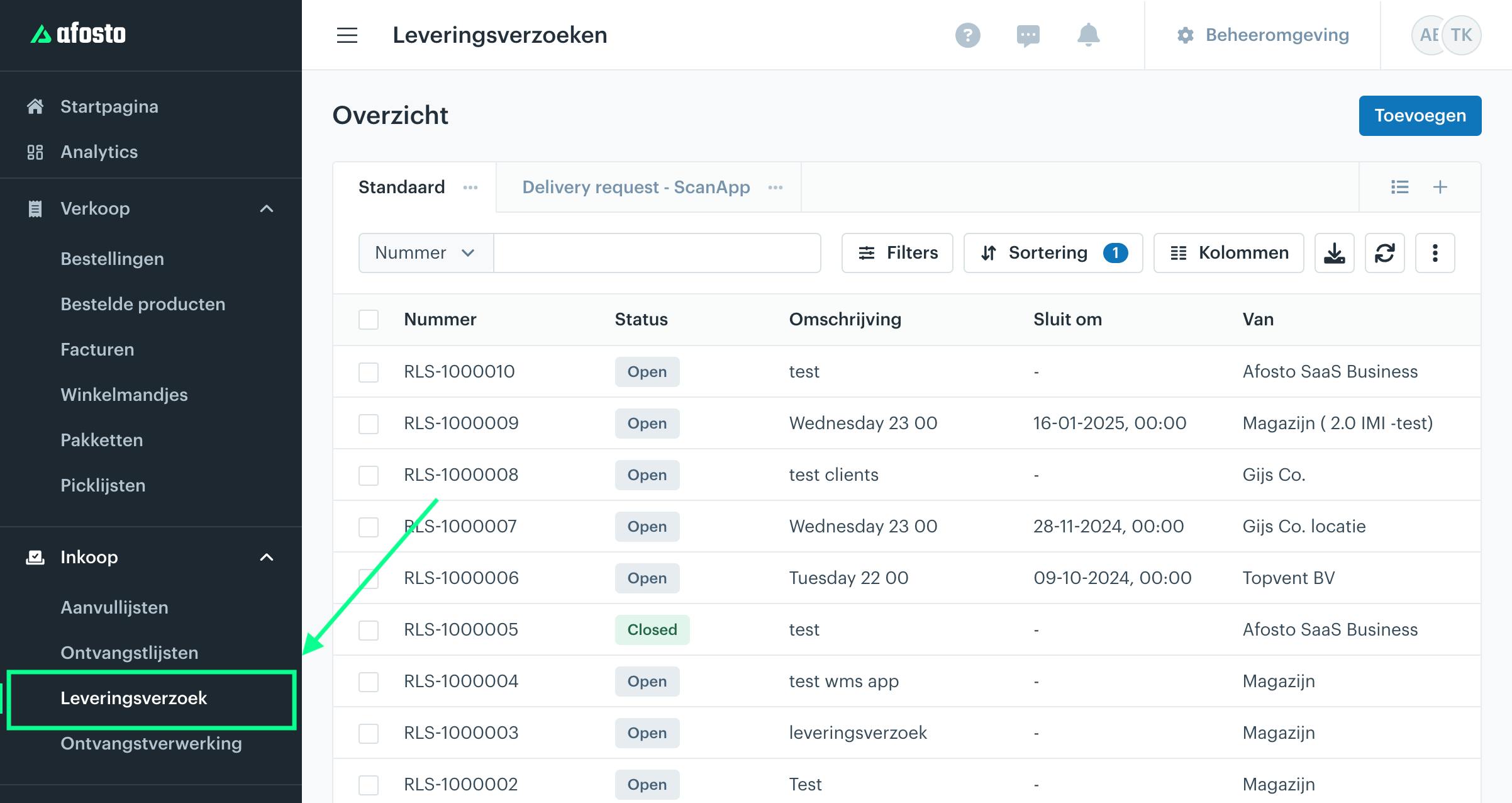
The delivery requests feature in Afosto makes it easy to move goods between locations, such as shops and warehouses. As soon as there is a need for certain products in the shop (for example, to replenish stock), a delivery request is created automatically in the system.
These requests are visible in real time through the ScanApp, so staff in the shop or the warehouse know exactly which items need to be moved. After collecting and confirming the goods, the request can be closed. On receipt at the other end it is processed through goods receipt, so that stock stays up to date everywhere.
-
Less manual coordination
-
More control over stock between locations
-
A clear overview of open and completed deliveries
Thanks to this structure, the entire process of moving stock is streamlined and the risk of errors is greatly reduced, exactly the way Superstellar puts it to use in their day-to-day operations.
Is cross-docking right for your organization?
A few questions to ask yourself:
-
Do you often have peaks in your order volume?
-
Do you want to limit inventory risk?
-
Can you manage processes tightly through software such as an order management system?
-
Do you already work with reliable suppliers and carriers?
If you answered "yes" more than once, it is time to look at your logistics strategy. Want to know more about this? Then take a look at this page about cross-docking too.
Conclusion
Cross-docking is the way to simplify and speed up logistics. By making smart use of a cross-dock strategy, you save on costs, gain time and improve your delivery reliability.
Want to know whether cross-docking is a good fit for your e-commerce organization too? Get in touch, we are happy to think along with you.
Cross-docking FAQ
What exactly is cross-docking?
Cross-docking is a logistics method in which products move directly from the incoming transport to the outgoing transport, without any storage in between. It saves time, space and handling.
When is cross-docking interesting for my business?
Cross-docking is particularly interesting if you work with fast-moving products, have little space for storage, or follow a just-in-time strategy. Retailers with multiple shops or locations can also gain a lot from it.
What do I need to apply cross-docking well?
The essentials are: real-time insight into stock and orders, a solid WMS, reliable suppliers and clear processes for receiving and shipping. Platforms such as Afosto support this with smart software and delivery requests.
What is a delivery request in Afosto?
A delivery request is an internal request to move products between locations, for example from the warehouse to a shop. These are created automatically or manually and help to coordinate stock movements tightly.
How is a delivery request handled?
Staff open the request in the ScanApp, collect the items and mark the request as done. On arrival at the receiving location the request is processed through goods receipt, where everything is checked for accuracy.